

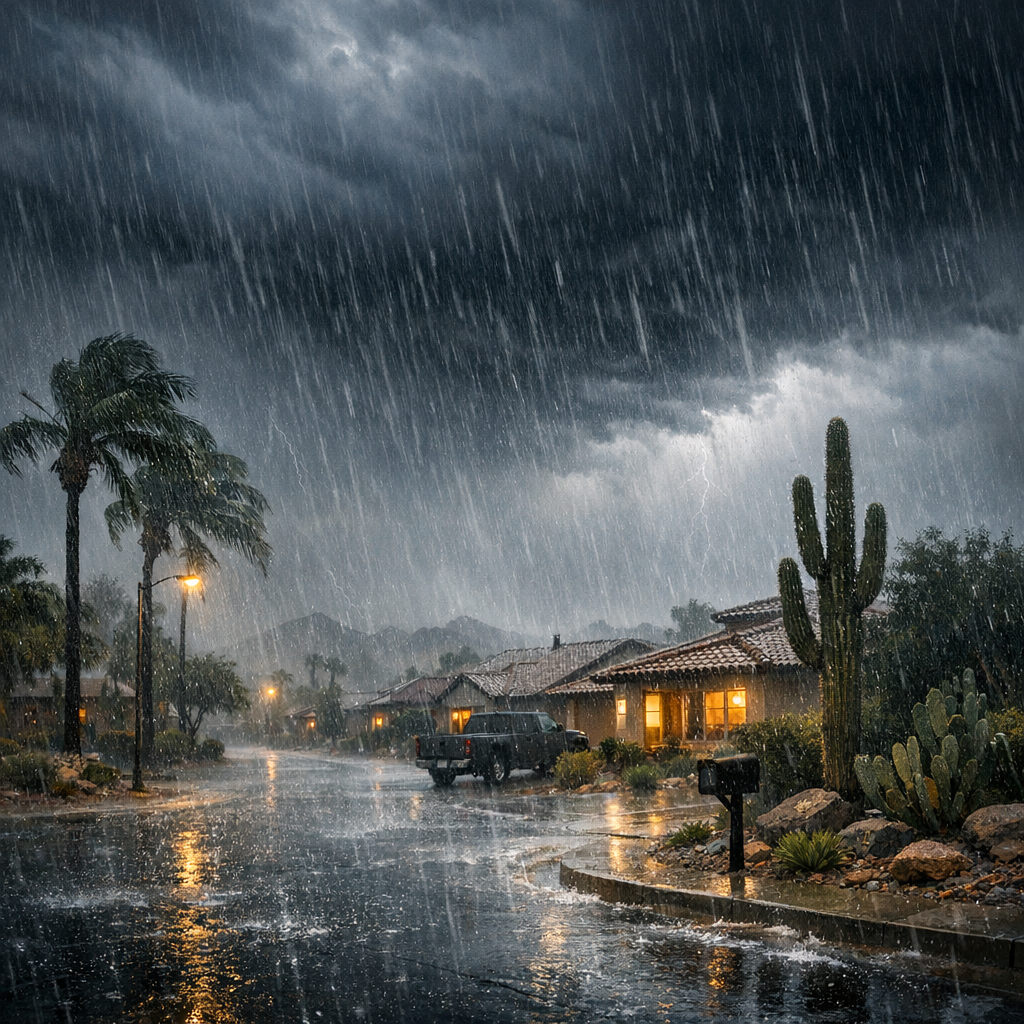
As Phoenix residents, we are all too familiar with the annual monsoon season that brings a mix of relief from the heat and potential hazards. Officially running from June 15 to September 30, the monsoon season introduces increased humidity, thunderstorms, heavy rain, lightning, hail, high winds, flash flooding, dust storms, and extreme heat. Being prepared is crucial to ensure safety during this period.
Understanding Monsoon Hazards
Monsoon storms can develop rapidly, leading to various dangers:
- Flash Flooding: Sudden heavy rains can cause flash floods, especially in low-lying areas and washes. It’s essential to avoid these areas during storms.
- Dust Storms (Haboobs): Intense winds can create massive dust storms, reducing visibility to near zero on roadways.
- Lightning: Frequent lightning strikes pose risks to individuals outdoors and can ignite fires.
- High Winds and Microbursts: These can cause damage similar to weak tornadoes, uprooting trees and damaging structures.
Home Preparation
Protecting your home is a vital step in monsoon preparedness:
- Roof Maintenance: Ensure your roof is in good condition to withstand heavy rains and winds. Regular inspections can prevent leaks and structural damage.
- Tree Trimming: Trim trees and remove dead branches to reduce the risk of them falling during high winds.
- Drainage Systems: Clear gutters and downspouts to prevent water accumulation and potential flooding.
- Secure Outdoor Items: Bring in or secure outdoor furniture, grills, and other items that could become projectiles in strong winds.
Driving Safety
Monsoon conditions can make driving hazardous. Follow these guidelines:
- Avoid Driving in Storms: If possible, delay travel until conditions improve. If you must drive, reduce speed and increase following distance.
- Never Cross Flooded Roads: Do not attempt to drive through flooded areas. The depth and current can be deceptive and dangerous. Remember, “Turn Around, Don’t Drown.”
- Pull Aside, Stay Alive: If caught in a dust storm with reduced visibility, pull off the road as far as possible, turn off your lights, set the parking brake, and take your foot off the brake pedal to avoid being hit by other vehicles.
Personal Safety
Protect yourself and your family with these measures:
- Stay Informed: Monitor local weather reports and alerts to stay updated on monsoon activity.
- Emergency Kit: Prepare an emergency kit with essentials such as water, non-perishable food, flashlight, batteries, first aid supplies, and important documents.
- Plan Evacuation Routes: Familiarize yourself with multiple routes to higher ground in case of flooding.
- Avoid Outdoor Activities: Limit outdoor activities during storms, especially hiking or camping near water bodies or in high elevations.
By taking these precautions, you can navigate the monsoon season safely and protect your home, vehicle, and loved ones from potential hazards.