

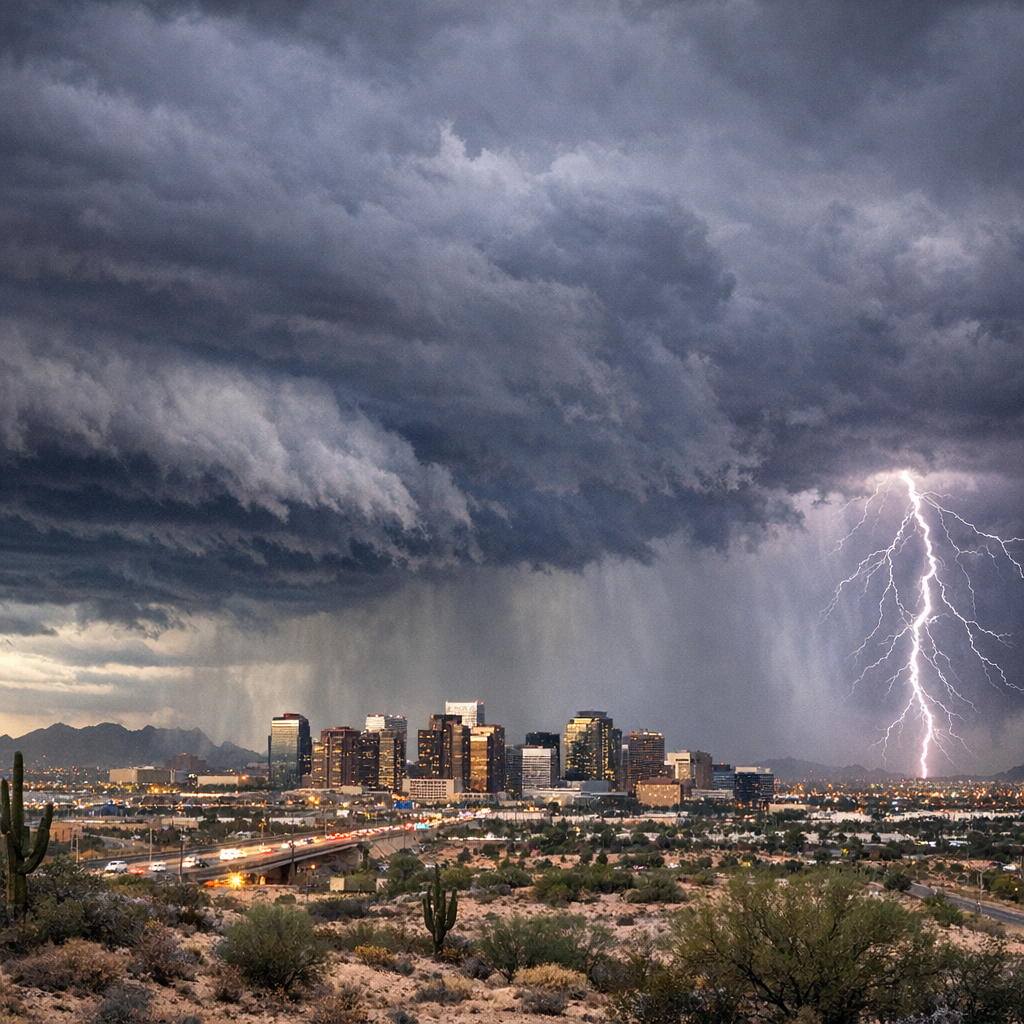
As monsoon season approaches in Phoenix, it’s crucial to understand the associated weather patterns and take necessary precautions to ensure safety and minimize property damage.
Understanding Monsoon Season
Monsoon season in Arizona officially runs from June 15 to September 30. During this period, the region experiences increased humidity, leading to thunderstorms, heavy rain, lightning, hail, high winds, flash flooding, dust storms, and extreme heat. These conditions can develop rapidly, making preparedness essential.
Safety Tips for Residents
Driving Precautions
- Expect the Unexpected: Always carry extra supplies, including a fully charged cell phone, drinking water, and an emergency kit, in case of extended highway closures.
- When in Doubt, Wait It Out: If you encounter a dust storm or heavy rain ahead, it’s best to exit the roadway and wait for the storm to pass. Find a safe area away from traffic.
- Low Visibility Protocol: In conditions of low or zero visibility, pull your vehicle off the road as far to the right as possible. Turn off your lights, set the parking brake, and remove your foot from the brake pedal to prevent other drivers from mistaking your vehicle as a path to follow.
- Avoid Flooded Areas: Never attempt to cross a flooded wash, even if it appears shallow. Water depth can be deceptive, and the road may be damaged beneath the surface.
Home Preparation
- Roof Inspection: Schedule a professional roof inspection to identify and repair potential vulnerabilities before the onset of heavy rains.
- Secure Outdoor Items: Anchor or store outdoor furniture, grills, and other items that could become projectiles in high winds.
- Clear Drainage Systems: Ensure gutters and downspouts are free of debris to facilitate proper water flow and prevent water damage.
- Tree Maintenance: Trim trees and remove dead branches to reduce the risk of falling limbs during storms.
Personal Safety
- Stay Informed: Sign up for local weather alerts and monitor forecasts regularly to stay updated on potential storms.
- Emergency Kit: Assemble an emergency kit containing essentials such as water, non-perishable food, medications, flashlights, batteries, and important documents.
- Plan Evacuation Routes: Familiarize yourself with multiple evacuation routes in case primary paths are blocked by flooding or debris.
Conclusion
By taking proactive measures and staying informed, residents can navigate the challenges of monsoon season more safely. Preparedness not only protects individuals and families but also helps preserve property and contributes to community resilience during these intense weather events.