

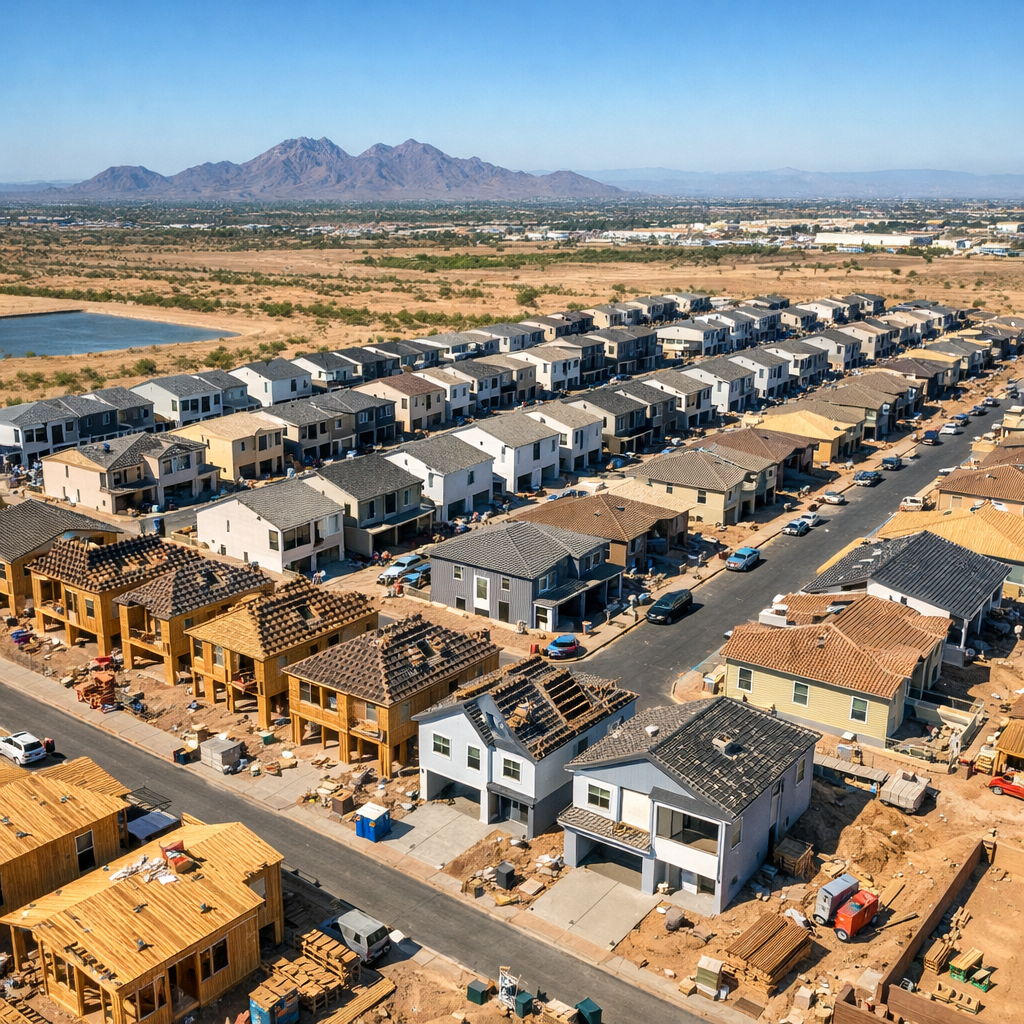
Phoenix’s housing market is experiencing notable shifts, with changes in home prices, rental rates, and significant new developments shaping the landscape.
Current Market Trends
As of March 2026, the average home value in Phoenix stands at $410,169, reflecting a 2.7% decrease over the past year. Homes typically go pending in around 26 days, indicating a moderately paced market. The median sale price is $414,333, with a median list price of $458,333. Approximately 14.4% of sales are closing above the list price, suggesting competitive conditions in certain segments.
In the rental sector, the average rent in Phoenix is $1,550, which is below the national average of $1,895. This affordability continues to attract renters to the area.
Addressing Housing Shortages
Despite these trends, Arizona faces a significant housing shortage. A report by the Common Sense Institute highlights an immediate need for approximately 56,000 housing units and a long-term deficit of around 110,000 homes. Factors such as high housing prices, elevated interest rates, and supply constraints contribute to this shortfall, making it challenging for many residents to find suitable housing.
New Developments and Initiatives
To combat the housing shortage, several developments are underway. The City of Phoenix has broken ground on The Moreland, a 237-unit affordable housing community in downtown. This project aims to provide accessible and dignified housing for Phoenix families, with completion anticipated in two phases by December 2027.
In Buckeye, the Teravalis development has launched, projected to eventually house up to 300,000 residents in 100,000 homes. This master-planned community addresses the growing housing demand in one of America’s fastest-growing cities.
Additionally, the planned 2,500-acre Grand View Arizona manufacturing campus in Buckeye is expected to attract companies across various advanced industries, potentially yielding over $1 billion in economic impact. This development reflects Buckeye’s rapid growth and positions the city as a competitive destination for high-quality employers.
Conclusion
Phoenix’s housing market is in a state of flux, with declining home values, a pressing need for more housing units, and significant developments underway. These factors collectively shape the city’s real estate landscape, offering both challenges and opportunities for residents and investors alike.