

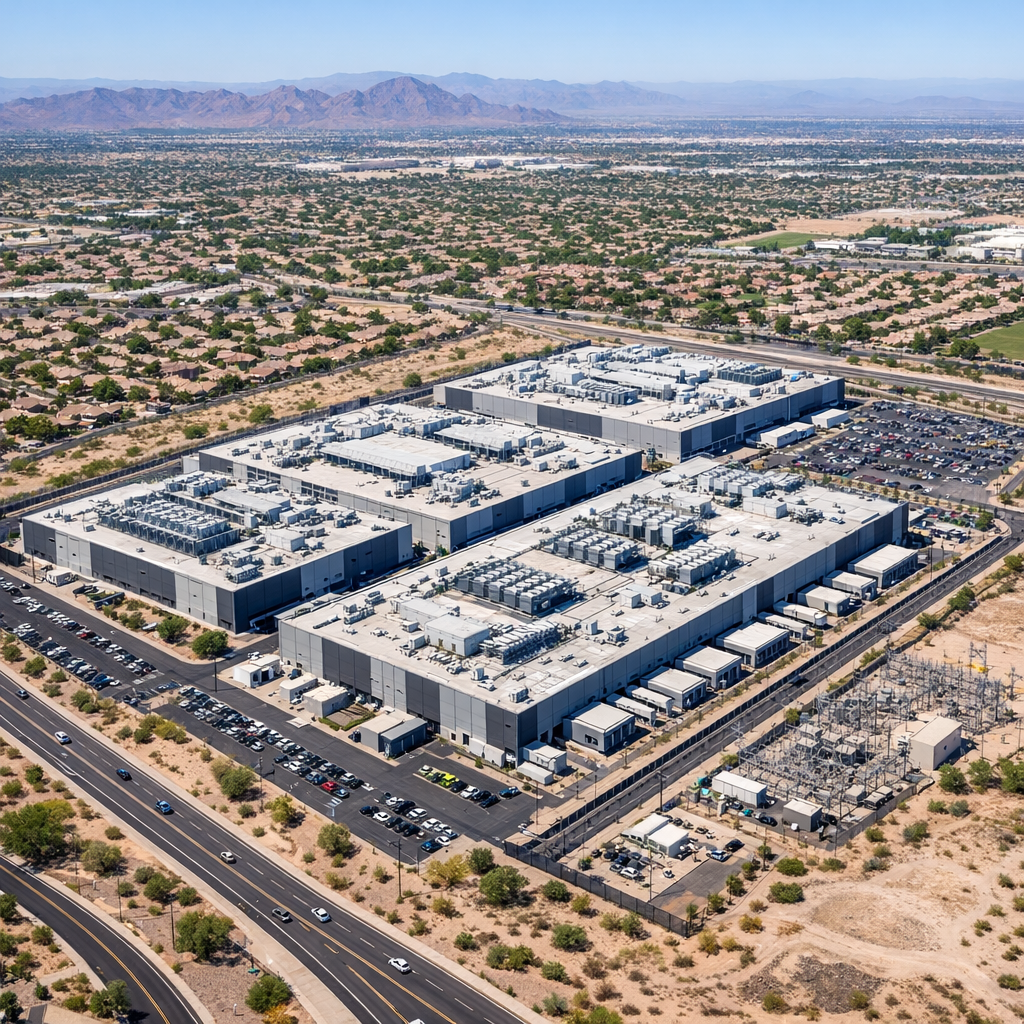
Phoenix has emerged as a significant hub for data centers, attracting major tech companies and bolstering the local economy. However, this rapid growth has sparked discussions about its impact on the community, particularly concerning heat emissions and neighborhood well-being.
Heat Emissions and Urban Temperature Rise
Recent studies indicate that data centers in the Phoenix area can increase local temperatures by up to 4°F. These facilities, operating vast numbers of GPUs, release substantial heat, creating ‘thermal plumes’ that exacerbate urban heat islands. For instance, a 169-megawatt data center in Chandler emits heat equivalent to 40,000 households. Such temperature increases can elevate energy demands for cooling in nearby homes and businesses, creating a feedback loop that worsens overall heat conditions.
Community Concerns and Opposition
Neighborhoods have started pushing back against data center projects, citing concerns over diminished quality of life and resource consumption. Residents argue that these facilities contribute to increased noise, traffic, and strain on local infrastructure. Despite community opposition, many projects proceed, often backed by substantial legal and lobbying efforts.
City Initiatives and Future Outlook
In response to these challenges, the City of Phoenix has initiated Community Safety Plans (CSPs) to address safety concerns and improve the quality of life in affected areas. These plans leverage technology and community-based resources to enhance public safety and manage the impact of large-scale developments. As Phoenix continues to grow as a technological hub, balancing economic development with community well-being remains a critical focus for city planners and residents alike.