

Phoenix, known for its scorching summers, experiences an intensified heat phenomenon known as the urban heat island (UHI) effect. This effect results in urban areas being significantly warmer than their rural counterparts, especially during nighttime.
What is the Urban Heat Island Effect?
The UHI effect occurs when urban structures like asphalt, concrete, and buildings absorb and retain heat during the day, releasing it slowly at night. This leads to higher nighttime temperatures in city centers compared to surrounding rural areas. In Phoenix, this temperature difference can be as much as 10°-14°F.
Impacts on Phoenix Residents
The intensified heat poses several challenges:
- Health Risks: Prolonged exposure to elevated temperatures increases the risk of heat-related illnesses. In 2017, at least 172 people in Phoenix died due to heat-related causes.
- Energy Consumption: Higher temperatures lead to increased use of air conditioning, resulting in higher energy bills and greater strain on the power grid.
- Environmental Concerns: Elevated temperatures can exacerbate air pollution and negatively impact local flora and fauna.
Mitigation Efforts
To combat the UHI effect, Phoenix has initiated several strategies:
- HeatReady Program: This initiative treats heat readiness akin to hurricane preparedness, offering text alerts and establishing emergency cooling centers.
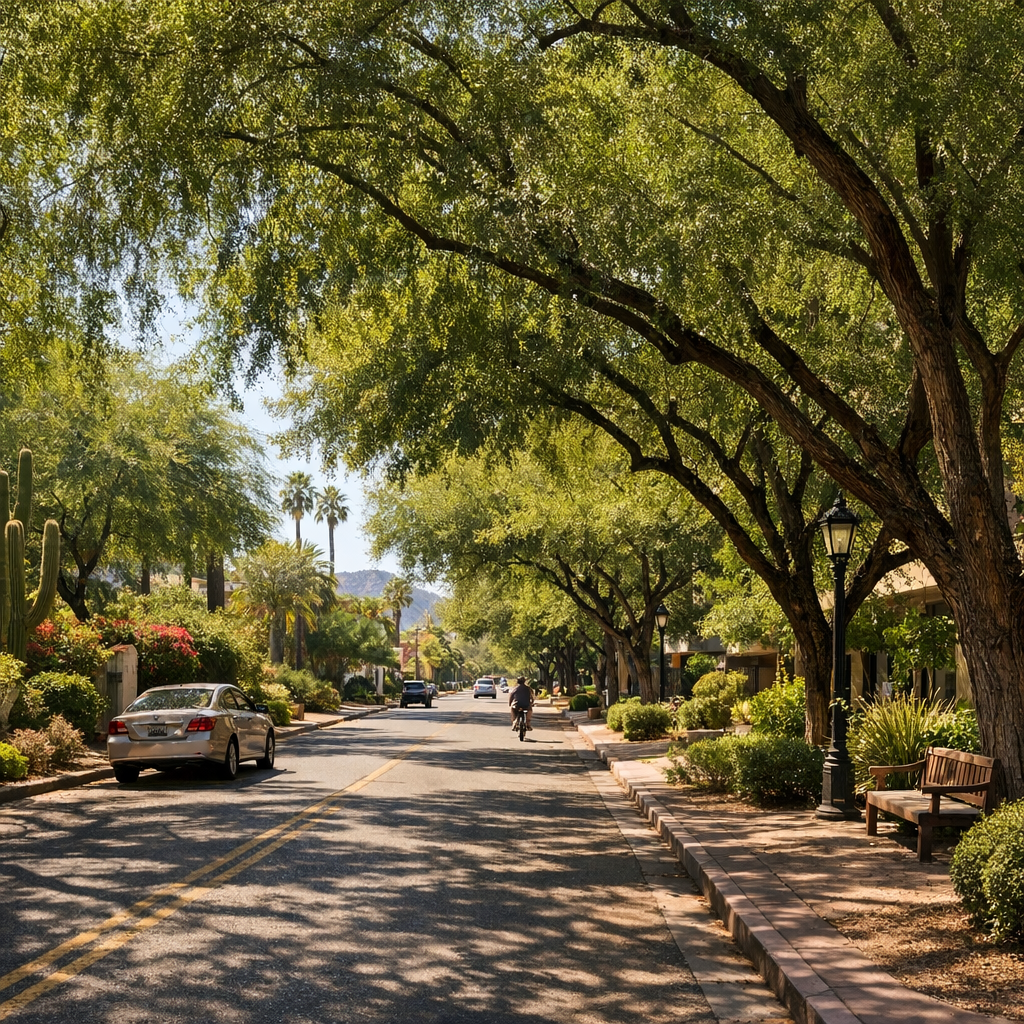
- Urban Greening: Increasing tree canopy coverage is a priority. Phoenix aims to achieve 25% tree canopy coverage over a 20-year period, which could reduce temperatures by nearly 8°F in shaded areas.
- Community Engagement: Programs like Nature’s Cooling Systems collaborate with residents to redesign neighborhoods, incorporating more shade and green spaces to alleviate heat.
What Can Residents Do?
Individuals can also contribute to mitigating the UHI effect:
- Plant Trees and Vegetation: Adding greenery around homes can provide shade and reduce surrounding temperatures.
- Use Reflective Materials: Opting for reflective roofing and paving materials can decrease heat absorption.
- Stay Informed: Utilize city resources and alerts to stay updated on heat advisories and available cooling centers.
Understanding and addressing the urban heat island effect is crucial for the health and well-being of Phoenix residents. Through combined efforts of city initiatives and community participation, it’s possible to mitigate the challenges posed by this phenomenon.